Bald-faced Hornet Nest, June-July 2019
(the Bald-faced Hornet is a yellowjacket wasp species, Dolichovespula Maculata)
Chuck Varney
I became aware of two hornet nests under construction on June 25th while standing at the front door with a Verizon technician who'd just returned from checking our phone lines. In mid conversation he said "I heard a buzz--and it wasn't the phone line." A hornet had just risen past him, inches away, on its way to a nest 10 inches above the front door. I noticed there was another one six feet away attached to a soffit vent grill. Both were about golf ball sized (Figure 1).
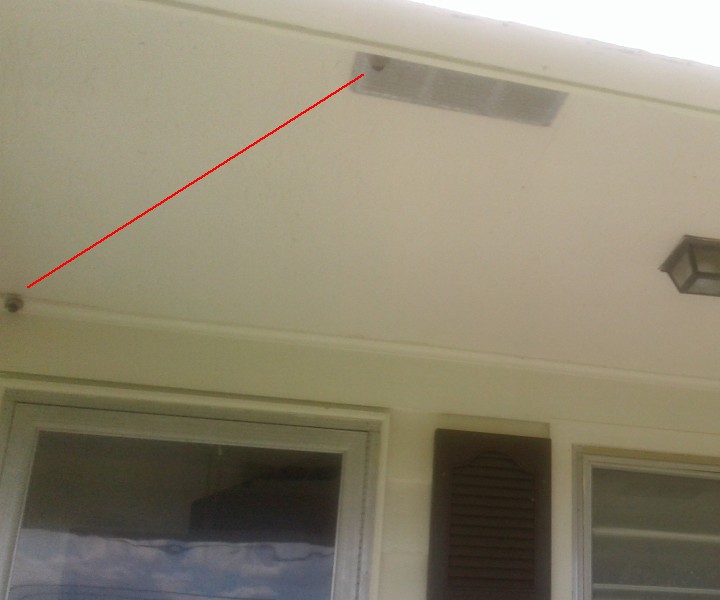
Figure 1. Photo 3 Jul 19
Three days later I took photographs of the two nests. The nest above the front door was abandoned and looked to have been attacked. There was activity at the remaining nest. See Figures 2, 3, and 4.
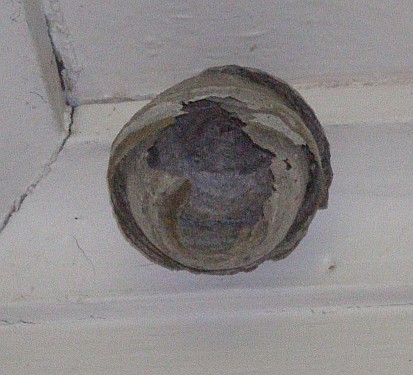
Figure 2. Nest above front door. Photo 28 Jun 19
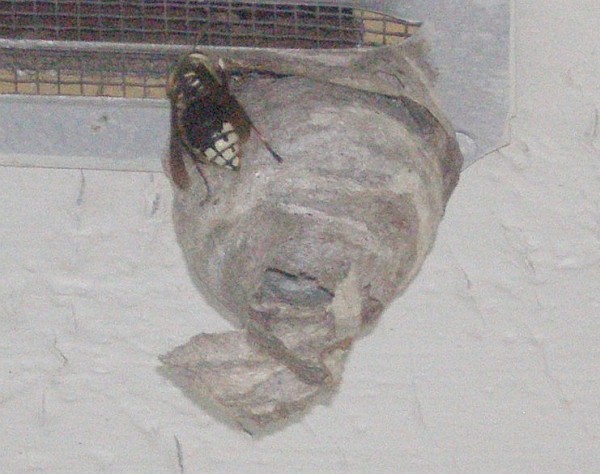
Figure 3. Nest attached to soffit vent grill
Photo 28 Jun 19
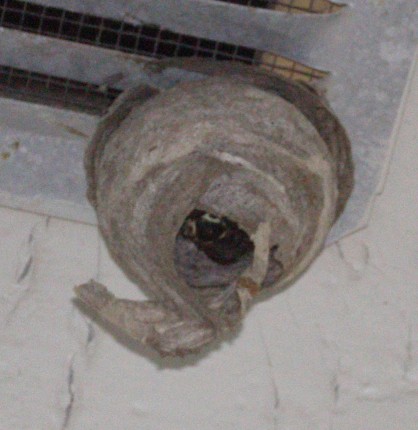
Figure 4. Queen visible while in the nest (see thorax
pattern in Fig. 5 for reference) Photo 28 Jun 19
Sometime after taking the next photo (Figure 5, 29 Jun 19) I realized that it showed the queen in the process of building a new outer nest envelope.
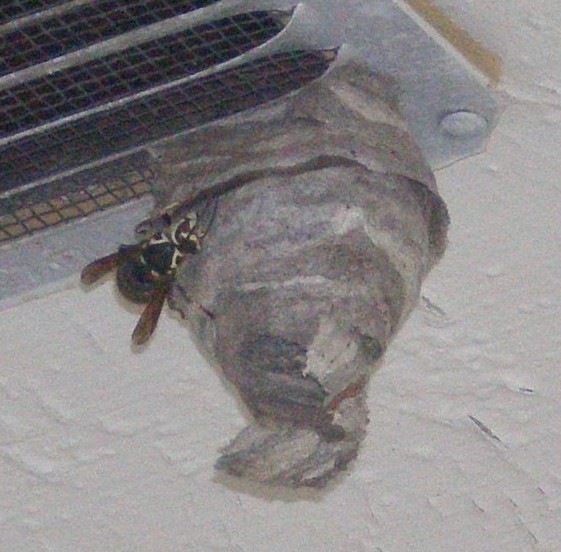
Figure 5. At work on a new layer. Photo 29 Jun 19
On July 4th, while sitting on the front porch, I saw four hornets enter the nest between 5:37P and 5:55P. One left at 6:00P and returned at 6:07P.
Figure 6 shows the nest as it appeared on 5 July. Nests had been built further from the front door in past years and I paid no attention to them. None grew larger than golf balls. By July 5th I'd read too many warnings of the potential danger of nests near traffic areas and decided to remove the active nest. I had four options in mind: 1) use a wasp and hornet spray; 2) use a garden hose; 3) fill a soup can with soapy water, and suitably protected--and after dark--raise the can to immerse the nest, then shear it free with a piece of sheet metal; and 4) a variation on 3) that mounted the can on an extendable pole, enabling staying farther away from the nest. I ultimately chose the one which would require the most work--number 4.
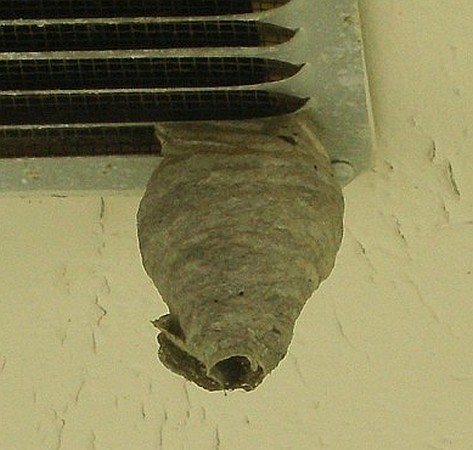
Figure 6. Construction state a week later than Fig. 5
Photo 5 Jul 19
Figure 7. shows the setup pre-positioned for an after-sunset mission on July 6th. The can is screwed to a piece of wood jammed into the extendable part of the support pole. The can is full of soapy water, but is slowly leaking due to the seal around the screw having been broken when the pole fell over the day before when it was not attached to a support frame.
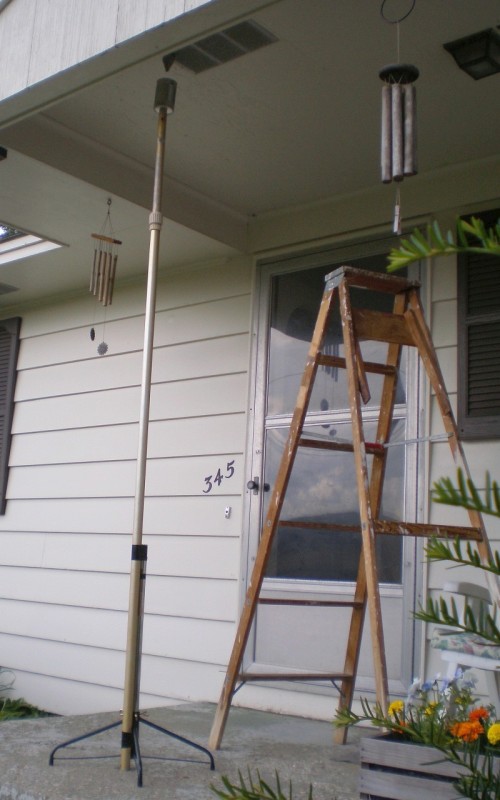
Figure 7. Set up for a nighttime intervention
Photo 6 Jul 19
Figure 8. shows the setup the next morning, July 7th. Figures 9. and 10. are photos taken later the same day. Removing the can from the pole was a challenge as the wood piece would not come free of the pole, and I wanted to keep the can capped and full of liquid because I had no idea what might be alive in it. As it turned out the answer was nothing. I had feared there could have been a minimum of four hornets in the nest the night before, so I was suitably protected with a makeshift 'bee suit' (rain coat, rubber gloves, and a broad-brimmed hat with a large clear plastic bag pulled down over it) when I lifted the pole to immerse the nest.
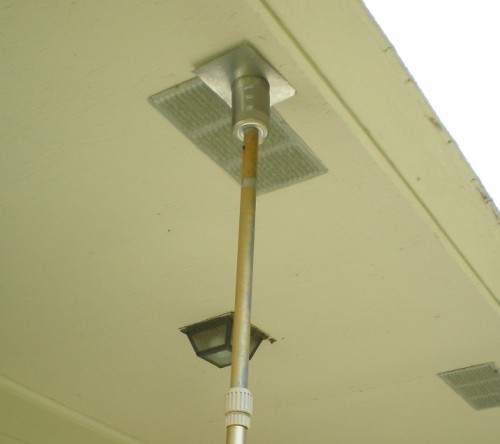
Figure 8. The morning after D-Day
Photo 7 Jul 19
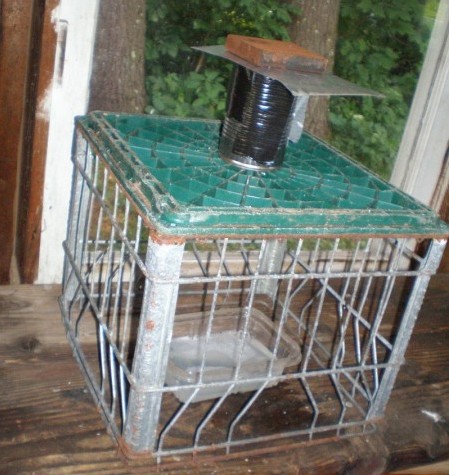
Figure 9. Can removed from pole and liquid contents
draining into a plastic container. Photo 7 Jul 19
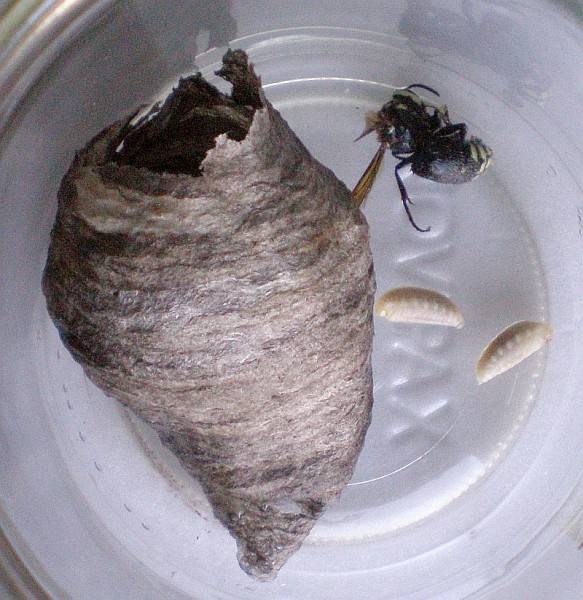
Figure 10. Soggy nest, queen, and two larvae after
transfer of the drained can contents to a glass jar
Photo 7 Jul 19
Figures 11-14, photographed on 8 Jul 19, show the nest and contents after a day of drying and then being snipped open with scissors. There was a total of 13 larvae in the nest. Two had been washed out of cells in the comb by immersion. Six of the remaining 11 had spun caps over their cells for pupation (transformation from larva to adult).
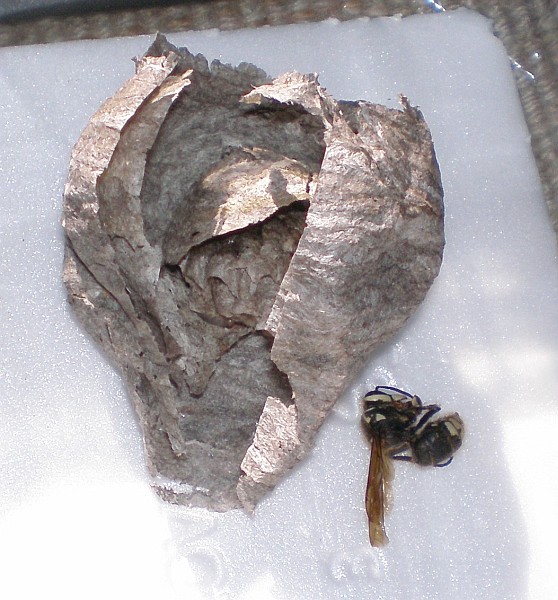
Figure 11. Nest cut open after a day of drying
Photo 8 Jul 19
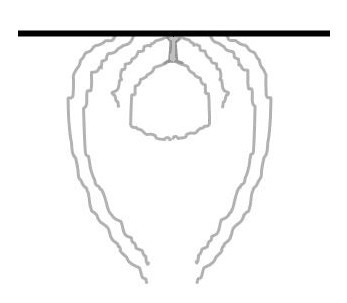
Figure 12. Sketch of the nest construction. Comb is
suspended at center.
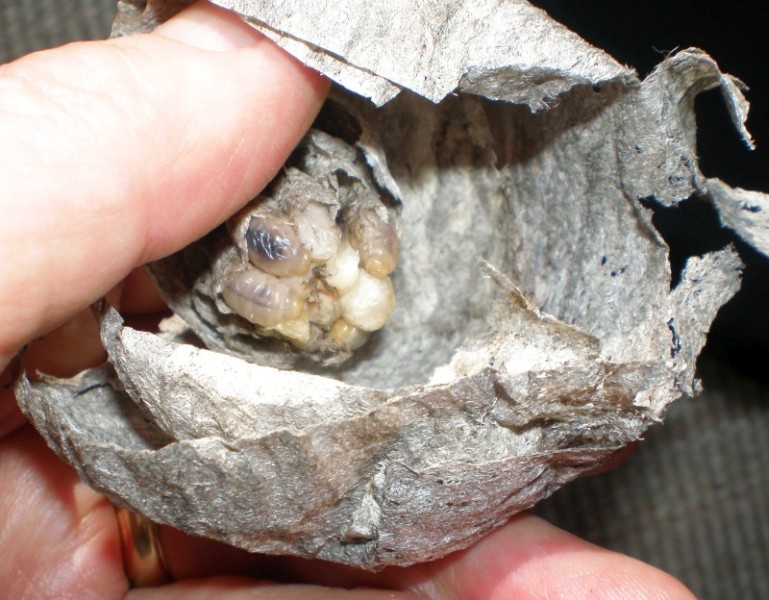
Figure 13. Photo 8 Jul 19
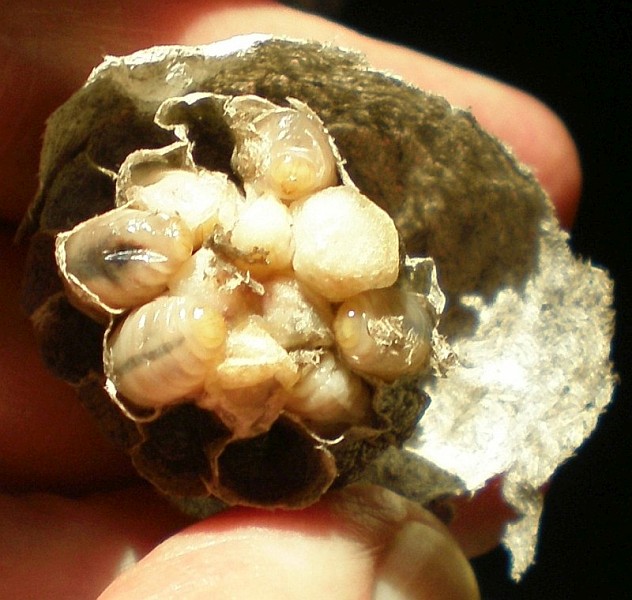
Figure 14. Five larvae in uncapped cells; six larvae in
capped cells. Photo 8 Jul 19
Figure 15., taken on July 11th, shows the stem, or petiole, that supports the comb.
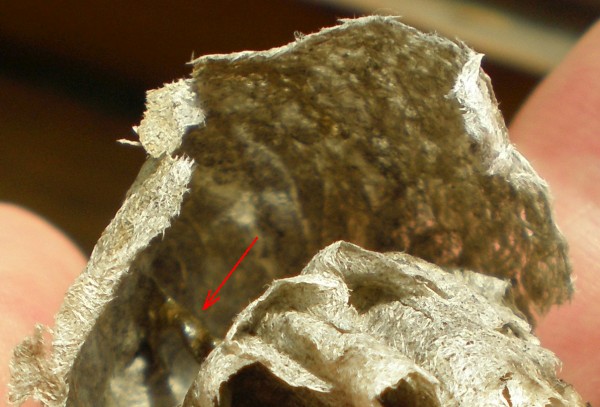
Figure 15. Arrow points to stem, or petiole, that
supports the comb. Photo 11 Jul 19
Figures 16-18, are closeup photos taken July 15th while holding the queen with one hand and a camera set to macro mode in the other.
The following three photographs are of the queen, the
only adult inhabitant of the nest at 9PM on 6 Jul 19.
No other hornets were observed looking for the nest
later that night or on the following days.
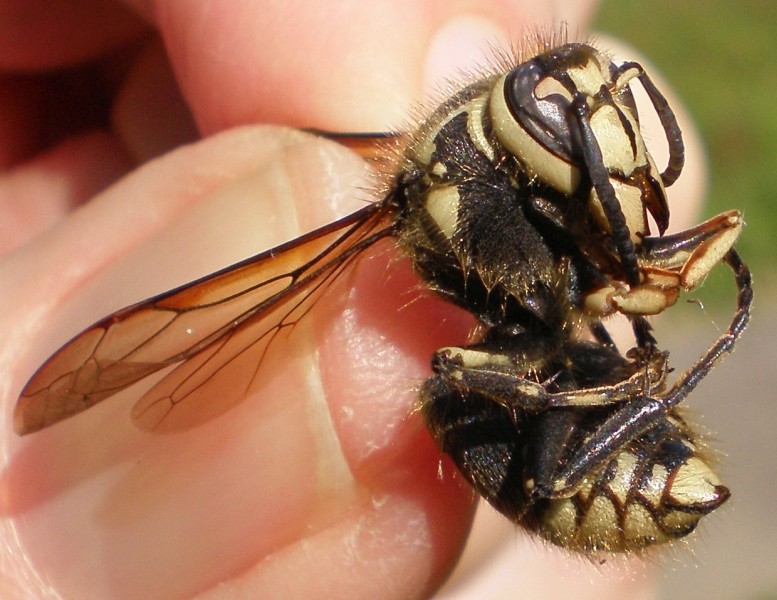
Figure 16. Photo 15 Jul 19
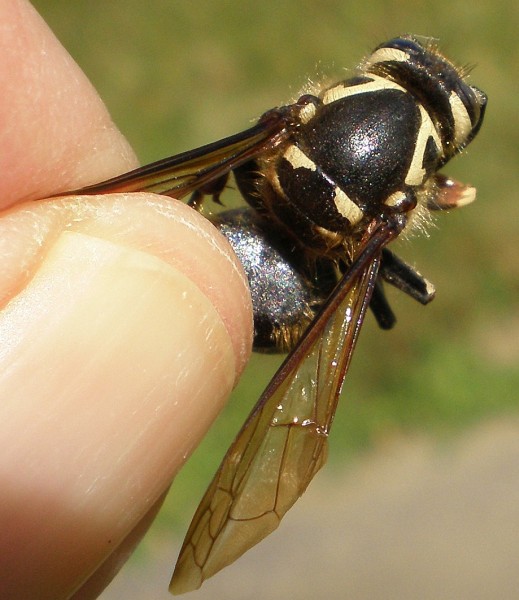
Figure 17. Photo 15 Jul 19
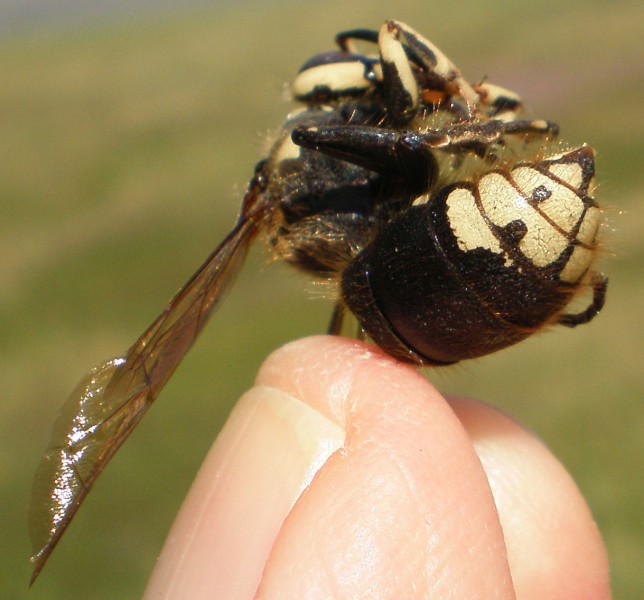
Figure 18. Photo 15 Jul 19
(the Bald-faced Hornet is a yellowjacket wasp species, Dolichovespula Maculata)
Chuck Varney

I became aware of two hornet nests under construction on June 25th while standing at the front door with a Verizon technician who'd just returned from checking our phone lines. In mid conversation he said "I heard a buzz--and it wasn't the phone line." A hornet had just risen past him, inches away, on its way to a nest 10 inches above the front door. I noticed there was another one six feet away attached to a soffit vent grill. Both were about golf ball sized (Figure 1).
Figure 1. Photo 3 Jul 19
Three days later I took photographs of the two nests. The nest above the front door was abandoned and looked to have been attacked. There was activity at the remaining nest. See Figures 2, 3, and 4.
Figure 2. Nest above front door. Photo 28 Jun 19
Figure 3. Nest attached to soffit vent grill
Photo 28 Jun 19
Figure 4. Queen visible while in the nest (see thorax
pattern in Fig. 5 for reference) Photo 28 Jun 19
Sometime after taking the next photo (Figure 5, 29 Jun 19) I realized that it showed the queen in the process of building a new outer nest envelope.
Figure 5. At work on a new layer. Photo 29 Jun 19
On July 4th, while sitting on the front porch, I saw four hornets enter the nest between 5:37P and 5:55P. One left at 6:00P and returned at 6:07P.
Figure 6 shows the nest as it appeared on 5 July. Nests had been built further from the front door in past years and I paid no attention to them. None grew larger than golf balls. By July 5th I'd read too many warnings of the potential danger of nests near traffic areas and decided to remove the active nest. I had four options in mind: 1) use a wasp and hornet spray; 2) use a garden hose; 3) fill a soup can with soapy water, and suitably protected--and after dark--raise the can to immerse the nest, then shear it free with a piece of sheet metal; and 4) a variation on 3) that mounted the can on an extendable pole, enabling staying farther away from the nest. I ultimately chose the one which would require the most work--number 4.
Figure 6. Construction state a week later than Fig. 5
Photo 5 Jul 19
Figure 7. shows the setup pre-positioned for an after-sunset mission on July 6th. The can is screwed to a piece of wood jammed into the extendable part of the support pole. The can is full of soapy water, but is slowly leaking due to the seal around the screw having been broken when the pole fell over the day before when it was not attached to a support frame.
Figure 7. Set up for a nighttime intervention
Photo 6 Jul 19
Figure 8. shows the setup the next morning, July 7th. Figures 9. and 10. are photos taken later the same day. Removing the can from the pole was a challenge as the wood piece would not come free of the pole, and I wanted to keep the can capped and full of liquid because I had no idea what might be alive in it. As it turned out the answer was nothing. I had feared there could have been a minimum of four hornets in the nest the night before, so I was suitably protected with a makeshift 'bee suit' (rain coat, rubber gloves, and a broad-brimmed hat with a large clear plastic bag pulled down over it) when I lifted the pole to immerse the nest.
Figure 8. The morning after D-Day
Photo 7 Jul 19
Figure 9. Can removed from pole and liquid contents
draining into a plastic container. Photo 7 Jul 19
Figure 10. Soggy nest, queen, and two larvae after
transfer of the drained can contents to a glass jar
Photo 7 Jul 19
Figures 11-14, photographed on 8 Jul 19, show the nest and contents after a day of drying and then being snipped open with scissors. There was a total of 13 larvae in the nest. Two had been washed out of cells in the comb by immersion. Six of the remaining 11 had spun caps over their cells for pupation (transformation from larva to adult).
Figure 11. Nest cut open after a day of drying
Photo 8 Jul 19
Figure 12. Sketch of the nest construction. Comb is
suspended at center.
Figure 13. Photo 8 Jul 19
Figure 14. Five larvae in uncapped cells; six larvae in
capped cells. Photo 8 Jul 19
Figure 15., taken on July 11th, shows the stem, or petiole, that supports the comb.
Figure 15. Arrow points to stem, or petiole, that
supports the comb. Photo 11 Jul 19
Figures 16-18, are closeup photos taken July 15th while holding the queen with one hand and a camera set to macro mode in the other.
The following three photographs are of the queen, the
only adult inhabitant of the nest at 9PM on 6 Jul 19.
No other hornets were observed looking for the nest
later that night or on the following days.
Figure 16. Photo 15 Jul 19
Figure 17. Photo 15 Jul 19
Figure 18. Photo 15 Jul 19